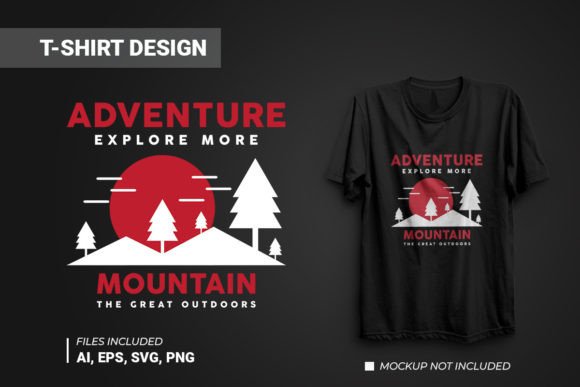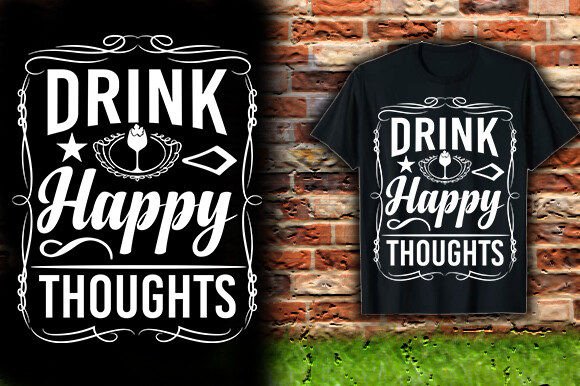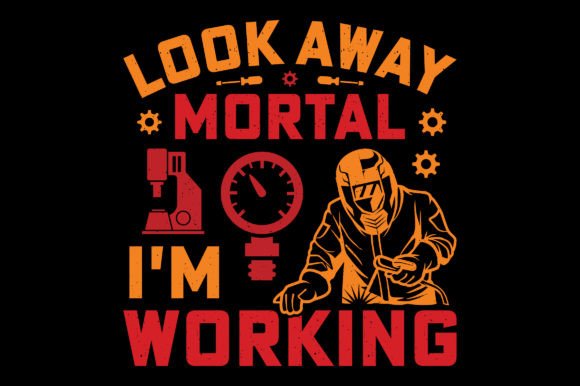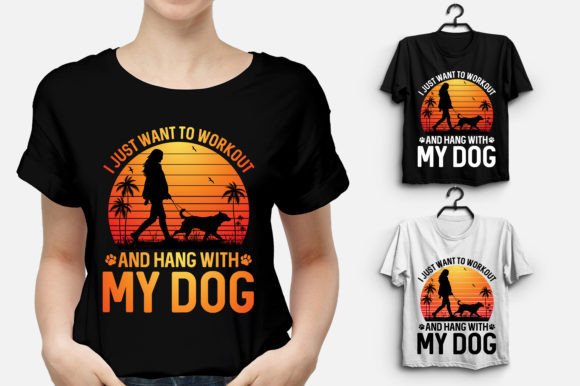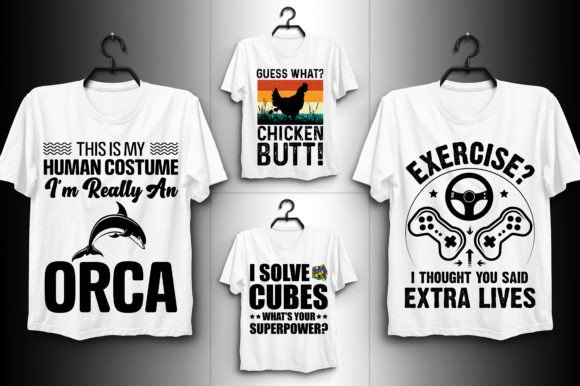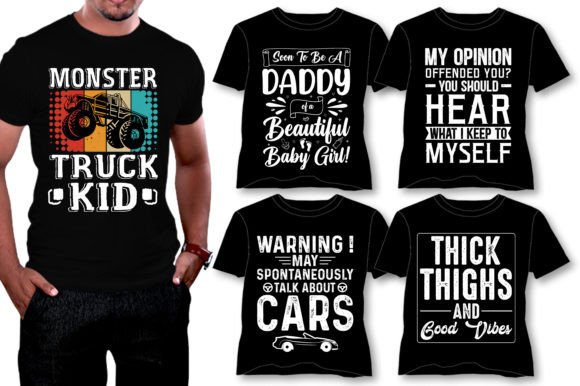
T-Shirt Design-Typography Graphics
As a graphic designer with years of experience in branding, marketing visuals, and digital design assets, I’ve come across countless T-shirt designs that promise a lot but deliver little. The T-Shirt Design-Typography bundle caught my attention not just for its name, but for the potential it holds for real client projects. This review will walk through how this design asset performs in practical scenarios, what it brings to the table, and where it might fall short.
The First Impression: Mood and Style
Upon first glance, T-Shirt Design-Typography exudes a modern, bold aesthetic that leans into contemporary typography trends. The visual mood is energetic, making it ideal for brands targeting younger audiences or those looking to make a statement. The style feels fresh and adaptable, fitting well within creative design spaces like handmade businesses, Etsy products, or print-on-demand ventures.
It’s clear that this design was crafted with both aesthetics and functionality in mind. The typography is clean yet expressive, offering a balance between readability and artistic flair. For a small business branding project, this could serve as a strong foundation for visual identity elements such as logos, social media graphics, and packaging design.
Real-World Application: Where It Shines
In a real client project, T-Shirt Design-Typography can be a powerful tool. Whether you're working on a seasonal campaign, a boutique product line, or an online product launch, this design asset offers versatility. It works well in large layout areas, hero graphics, and product mockups, where its boldness can stand out without overwhelming the overall composition.
For instance, if a client wants a t-shirt design that doubles as a sticker design or a Canva template, T-Shirt Design-Typography can provide a cohesive look that aligns with their brand’s visual language. It also fits seamlessly into editorial design, web design, and digital ads, where a strong typographic presence can enhance audience engagement.
This design is especially useful for commercial design projects that require a mix of creativity and professionalism. Its high-resolution PNG files and EPS vector formats ensure that it can be scaled and edited without losing quality, making it a reliable choice for print-on-demand sellers and digital marketers.
Best Use Cases: Themed Collections and Campaign Visuals
T-Shirt Design-Typography excels when used in themed collections or campaign visuals. It can act as a decorative accent or a central element in a series of related designs. For example, if a client is launching a limited-edition product line, this design could be adapted into a set of social media posts, website banners, and promotional materials that all maintain a consistent visual theme.
Its print-ready format (4500×5400px at 300 dpi) makes it suitable for sublimation design, t-shirt design, and other merchandise applications. The transparent PNG files allow for easy integration into various backgrounds, while the EPS files offer flexibility for vector editing in Adobe Illustrator or similar software.
Where to Be Cautious: Minimalist Branding and Corporate Projects
While T-Shirt Design-Typography is a strong asset in many contexts, it may not be the best fit for every project. In minimalist branding or professional corporate materials, its boldness could clash with the desired tone. Similarly, in low-contrast designs or crowded layouts, it might lose its impact or become visually jarring.
For clients who prioritize clean visual hierarchy or need a more subtle approach, this design might require careful placement or modification. It’s important to test it in black and white, check contrast on different backgrounds, and preview it at various sizes to ensure it meets the project’s needs.
Designer Notes: Practical Checks Before Use
Before using T-Shirt Design-Typography for a client project, there are several practical checks to consider. Test it in black and white to see how it holds up without color. Check contrast on both light and dark backgrounds to ensure readability. Preview it at small and large sizes to confirm that the typography remains legible and impactful.
Place it on real mockups to see how it looks in context. Test print quality to ensure that the resolution and file formats meet the client’s requirements. Review the file formats—PNG, EPS, and any included SVGs—to confirm they are editable and compatible with your workflow.
Compare it with other font styles, such as serif, sans serif, script, or display fonts, to determine if it aligns with the client’s brand voice. Most importantly, confirm the commercial license before using it for a client or business project to avoid any legal issues.
Conclusion: A Versatile Asset for Creative Projects
T-Shirt Design-Typography is a solid addition to any designer’s toolkit, particularly for projects that benefit from bold, expressive typography. Its versatility across multiple design applications—from t-shirt design to social media graphics—makes it a valuable resource for small business branding, handmade businesses, and digital sellers.
While it may not be the best fit for every project, its strengths in visual appeal, scalability, and adaptability make it a worthwhile consideration for designers looking to enhance their creative design portfolio. As with any graphic design asset, careful evaluation and testing are key to ensuring it meets the specific needs of a client’s project.